
Home
Preamble
Index
Areas
Dales
Hills
Lakes
Places
Reserves
Rivers
Structures
Villages
References
Me
Saunterings: Walking in North-West England
Saunterings is a set of reflections based upon walks around the counties of Cumbria, Lancashire and
North Yorkshire in North-West England
(as defined in the Preamble).
Here is a list of all Saunterings so far.
Guaranteed ad-free, AI-free and free!
If you'd like to give a comment, correction or update (all are very welcome) or to
be notified by email when a new item is posted - please send an email to johnselfdrakkar@gmail.com.
250. A Rainbow Celebration
I expect that regular readers no longer notice the rainbow above. Please have a look
at it now. It’s a marvel, isn’t it? Not just the bright colours but also the
light and shade around the rainbow. With the showers and the sunshine of the last
few days there has been a number of rainbows. Or has there?
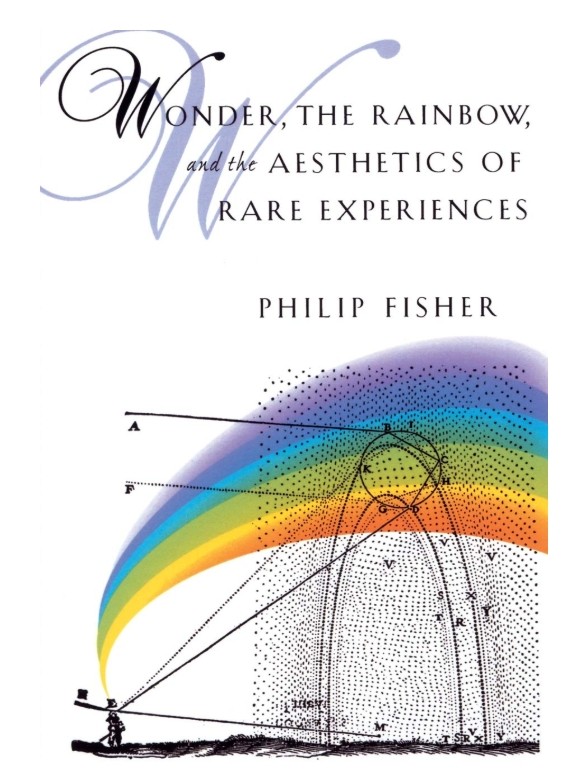 According to the book Wonder, the Rainbow, and the Aesthetics of Rare Experiences (Fisher, 1999)
written by Philip Fisher, Professor of English at Harvard University:
According to the book Wonder, the Rainbow, and the Aesthetics of Rare Experiences (Fisher, 1999)
written by Philip Fisher, Professor of English at Harvard University:
“Without human observers …, there are no rainbows. They are part of the human world. On an uninhabited planet there would continue to be sun and rain, stars, and snow, but there would be no rainbow and no horizon. . . . In its requirement of a human observer to exist at all, rainbows and horizon lines are closer to music or geometry: had there been no human world there never would have been any such thing.”
This comment has provoked me (by way of a little celebration for reaching No. 250) to
pause for a gentle interlude on the nature of rainbows and similar phenomena.
The above quote sometimes crops up in discussions of the concept of landscape.
It is argued that since rainbows and landscapes are both interpretations that we place
upon what we perceive then since (according to Fisher (1999)) rainbows do not exist
without us to perceive them neither do landscapes. I am happy to accept the
conclusion – that landscape is a human construct and therefore doesn’t exist without
us to construct it – but less so the premise – that rainbows don’t exist without us.
I have not read the Fisher book but I am sure that many subtleties concerning
the concept of a rainbow (and perhaps about the meaning of 'existence')
are mentioned to justify the conclusion above. However,
the use of the word ‘wonder’ in the title perhaps gives an indication of his argument.
If the sense of wonder is considered an integral, essential part of the concept of a
rainbow then, it seems to me, tautological to say that rainbows don’t exist without us
because there would have to be some agent (us) to experience that wonder.
As we know, the rainbow has many rich cultural connotations: the path to heaven
(some cultures consider a rainbow to be a bridge between heaven and Earth); a divine
promise not to destroy life (Genesis 9); the pot of gold; Wordsworth’s “my heart leaps
up when I behold a rainbow in the sky”; the song ‘Over the Rainbow’; the symbol of gay
pride; the ‘rainbow nation’ (South Africa); the bow of a war god (in Hindu traditions);
a symbol of peace, hope and cooperation; and so on. Clearly, if the concept of ‘rainbow’
includes some of these connotations then rainbows need us!
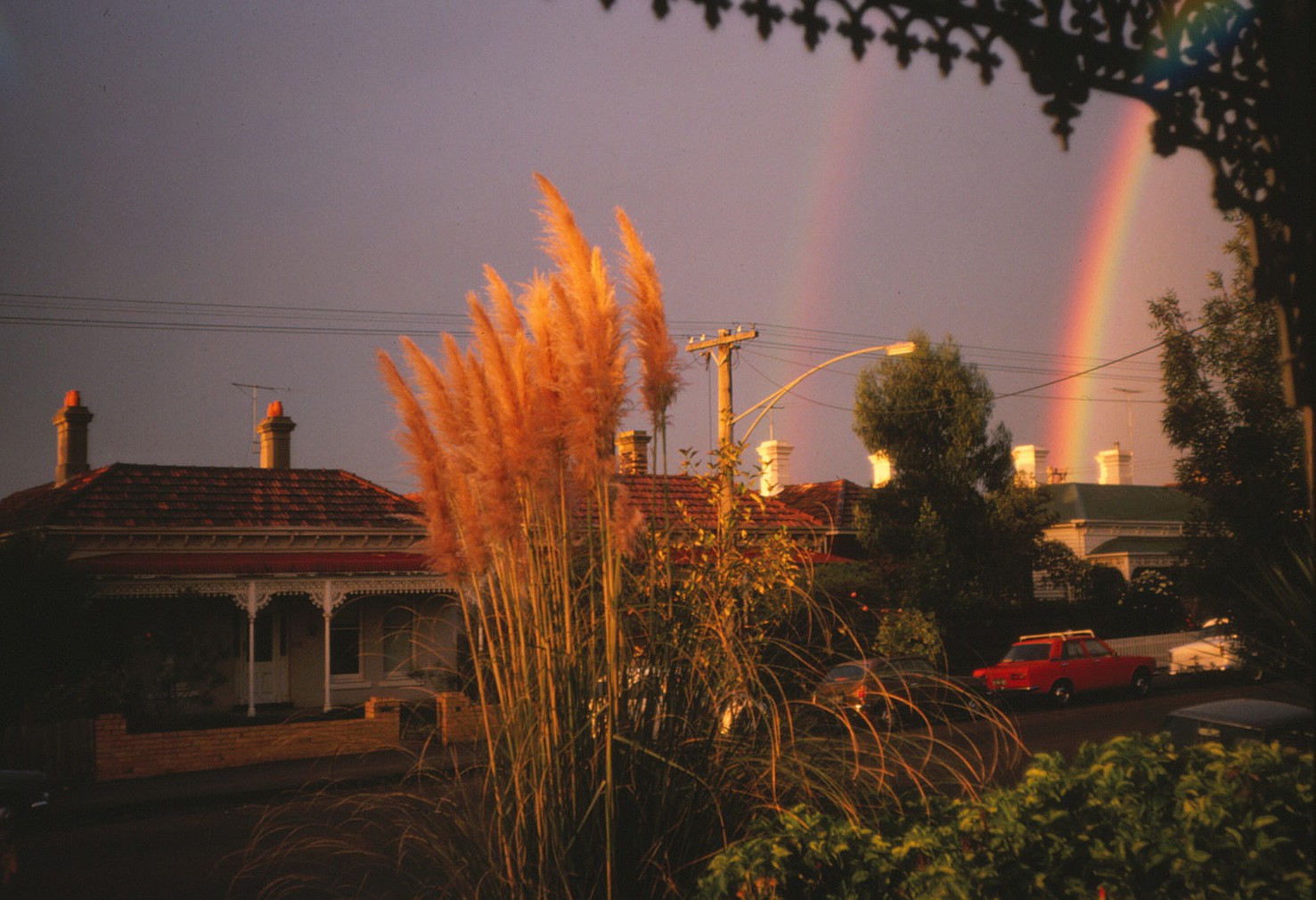 Left: A rainbow photographed from the verandah of our house in Melbourne in April 1976.
(A remarkably vertical rainbow - do you know what determines the angle of a rainbow?)
Left: A rainbow photographed from the verandah of our house in Melbourne in April 1976.
(A remarkably vertical rainbow - do you know what determines the angle of a rainbow?)
If we strip away the cultural connotations then what are we left with? It
is a scientific fact (or as close to a fact as science is able to get) that what we
perceive as a rainbow is caused by a particular effect of sunlight being reflected and
refracted by raindrops. That effect results from the laws of physics. Those laws are
universal and are not suspended when we are absent. That particular effect still occurs
when we are not present to appreciate it. So, in my opinion, there would be a rainbow
even if unobserved by us. Would we say that there were no rainbows when there were
dinosaurs but no humans? There was surely rain and sunshine then. I have no
idea whether a dinosaur’s eyes enabled it to perceive a rainbow, in some sense different to ours.
Incidentally, as an empirical question, is there any evidence that other species
today can perceive rainbows? Some, I expect, have the physical capability to do so.
Dogs, horses and eagles, for example, are visually well aware of their environment and
might notice something unusual within it, although they would not, of course, see the
rainbow as we do, and certainly not with our cultural connotations. A horse may be
startled by a hose-pipe lying where it doesn’t normally. Has any horse-rider ever
noticed a horse seeming to react to a rainbow?
I hope you are not skipping through this. You need to don mental deep-sea diving
gear to appreciate the profundity of these thoughts. Did you notice, for example, that the
book cover (above) has the rainbow colours upside-down? This may be because this is the
Australian edition and the publisher assumed everything in Australia is upside-down.
Or it may be part of a subtle trap. We may assume that we have seen such a rainbow but
then the book proves that it cannot exist and therefore we cannot trust what we think we have seen.
It may be significant that this argument that rainbows don't exist without humans
is not repeated with respect to lightning. Lightning, too, is a particular
atmospheric effect that results from the laws of physics. We experience a similar
sense of wonder and awe when we see lightning. It is, however, hard to argue that
lightning does not exist unless we are there to perceive it because it causes visible
effects that we can see later even if nobody saw the lightning at the time. Lightning
can scorch trees, damage chimneys, start wildfires, shatter rocks, and even kill people.
It would be hard to convince someone killed by lightning that the lightning didn’t
exist because nobody saw it. Unfortunately for the rainbow, it leaves no tangible
trace of its existence.
We must not let slip past Fisher’s assertion that the horizon is also only
there because we observe it. When I paddle on Morecambe beach the horizon over the
bay is about three miles away, to my eyes. That there is a horizon at all is, of
course, the result of the curvature of the Earth’s surface. That isn’t going to
change – and neither therefore is the presence of a horizon. Of course, a low mist
may obscure the horizon. Does that mean that the horizon then does not exist? The
key difference between a rainbow and a horizon is that the former is temporarily
visible and the latter is temporarily invisible.
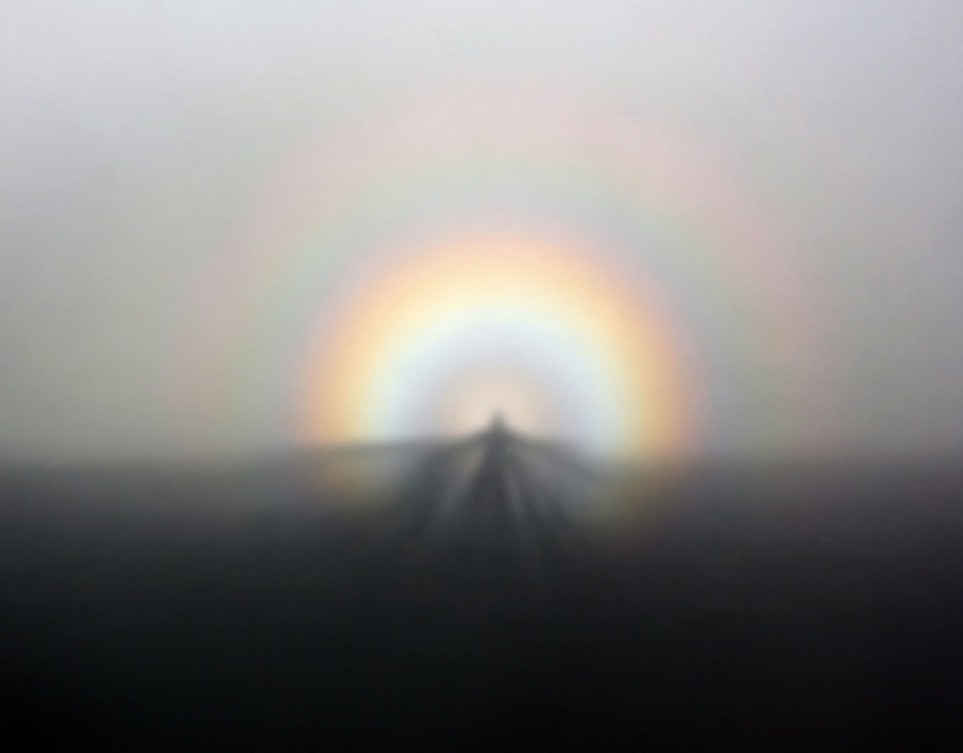 Right: A Brocken spectre, as shown in Wikipedia.
What about Brocken spectres? A Brocken spectre is seen when sunlight behind
you casts a shadow of you in a rainbow-coloured halo onto cloud below.
This particular configuration is rare and therefore so is the spectre.
The spectre is clearly
yours because if you wave to it then it will wave back.
The spectre's rarity and personal nature may create a greater sense of wonder
than an ordinary rainbow. It is possible to have a spectre of a non-human, say, a sheep
or a tree, but they won't look at it, so perhaps their spectre doesn't exist?
On reflection, I don't think Fisher's proposition can be simply that a
rainbow only exists if some human actually sees it. I think he requires that
humanity exists to potentially see it - and wonder at it. That's a more subtle argument - but still
dubious to me.
It is possible to deny or assert the existence of a rainbow as a whole.
But what if the wondrous element is only a part of the whole, for example, the
exotic turquoise, blue, green, orange of a kingfisher? Would
Fisher similarly argue that the whole kingfisher doesn't exist
if there were no humans to wonder at part of it, its colours?
Or would he say that the kingfisher would have to accept being a dull
brown (except to other kingfishers, I assume)?
What about photographs of rainbows and lightning? Obviously, cameras are
designed to create a visual effect similar to that seen at the time of the photograph.
What if I photograph a scene without noticing that there is a rainbow within it (and
nobody else noticing it either)? How can a camera create an image of something
that isn’t there, because nobody had seen it? I suppose it might be argued that
the photographic image also doesn’t exist unless there’s a human to observe it. If
so then turning a blind eye is the solution to all our problems: anything we don’t
like, we can all agree not to look at it, and then it won’t exist.
If it’s going to be argued that rainbows don’t exist without human observers
then we need to take account of the fact that what we can observe has changed. Nobody
had seen a virus (and I am quite capable of experiencing the requisite sense of wonder
at the properties of viruses) before the invention of the electron microscope in the 1930s. Can
anybody seriously argue that viruses did not exist before the 1930s?
Anyway, it is all a little disconcerting. Of course, in these Saunterings I
can only report on what I have seen – and what I therefore believe to exist. But you
only have my word for it. If nobody else saw whatever it was, did I hallucinate? What
about smaller objects that I might see and express awe and wonder about – say, a small
pearl-bordered fritillary – when I know that there’s nobody else about to see it? Does
the fritillary’s existence depend only on my observation? That’s an awe-some
responsibility to bear. Presumably, similar arguments may be made about other senses,
for example, sound. Did I really hear a cuckoo on Summersgill Fell? Did anybody else
hear it? I think I need to retreat to the realms of sanity.
I suspect that Fisher's rainbow thesis derives from a feeling that many have, that a scientific explanation
of a phenomenon rather diminishes our sense of wonder and awe, as is suggested by the
mathematical hieroglyphics adorning the upside-down rainbow on the cover.
This, of course, is a hoary argument, espoused, for example, by John Keats in his poem
Lamia of 1819 (when ‘philosophy’ meant natural science):
… Do not all charms fly
At the mere touch of cold philosophy?
There was an awful rainbow once in heaven:
We know her woof, her texture; she is given
In the dull catalogue of common things.
Philosophy will clip an Angel's wings,
Conquer all mysteries by rule and line,
Empty the haunted air, and gnomed mine—
Unweave a rainbow, as it erewhile made
The tender-person'd Lamia melt into a shade.
The poem is 708 lines of rhymed iambic pentameter and is therefore much too long and complex for me to
understand to see if Keats was being serious.
There is a similar debate with our experience of eclipses. There are (I am informed)
several mentions in the bible of the sky going mysteriously darker. The population at that
time would be less inclined to interpret this as a sign of the wrath of God or whatever if
they knew about the orbits of the Earth and the moon. An ignorance of the science
helpfully enables all sorts of interpretations of such events.
I remember our son, when two years old, experiencing a total eclipse when the day
went dark for ten minutes or so. As the light eventually gradually returned, he asked “Again? …”.
It would have been a shame to explain it all and tell him he’d have to wait five years (if
he stayed in Australia – but longer because we brought him back to England) for the next total eclipse.
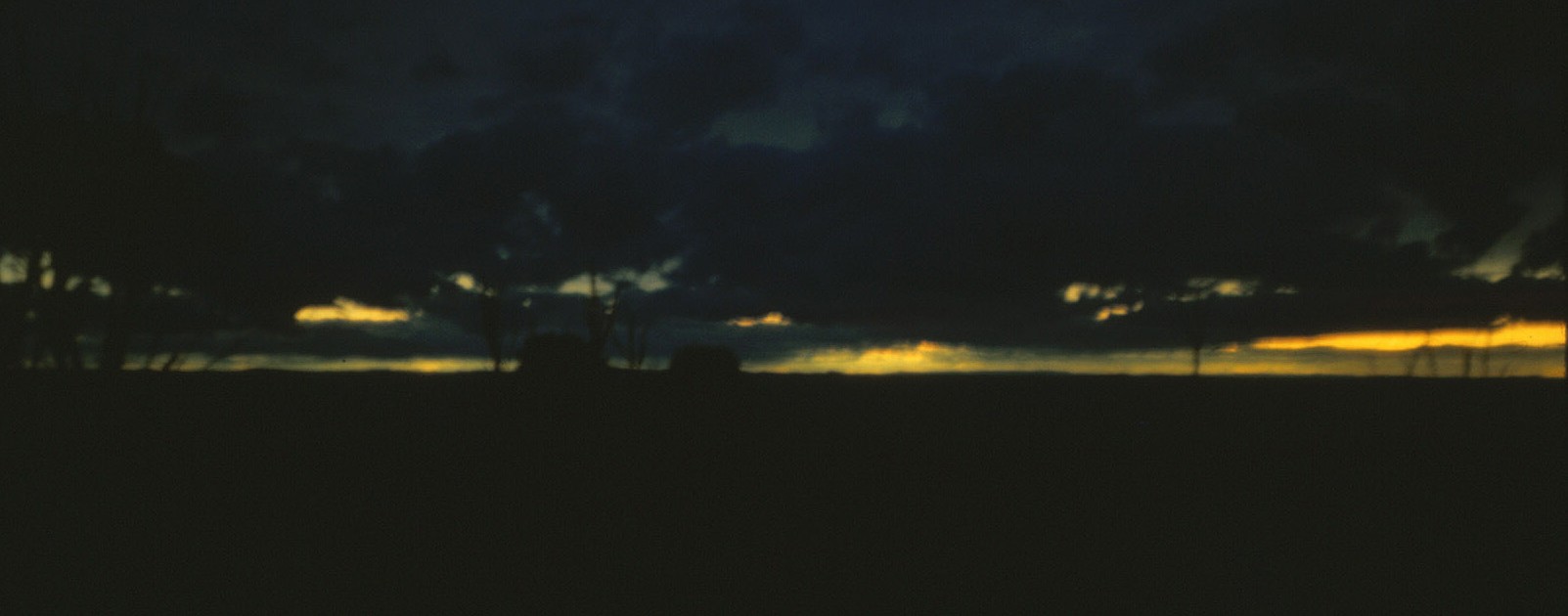
Daylight on Mount Macedon, Australia, 23rd October 1976
“Where there is darkness, let there be light.”
P.S. The angle of a rainbow is determined only by the height of the sun.
The lower the sun the steeper the angle.
Date: June 15th 2026
Home
Preamble
Index
Areas
Dales
Hills
Lakes
Places
Reserves
Rivers
Structures
Villages
References
Me
© John Self, 2018-

Top photo: Rainbow over Kisdon in Swaledale;
Bottom photo: Ullswater